
Additional information
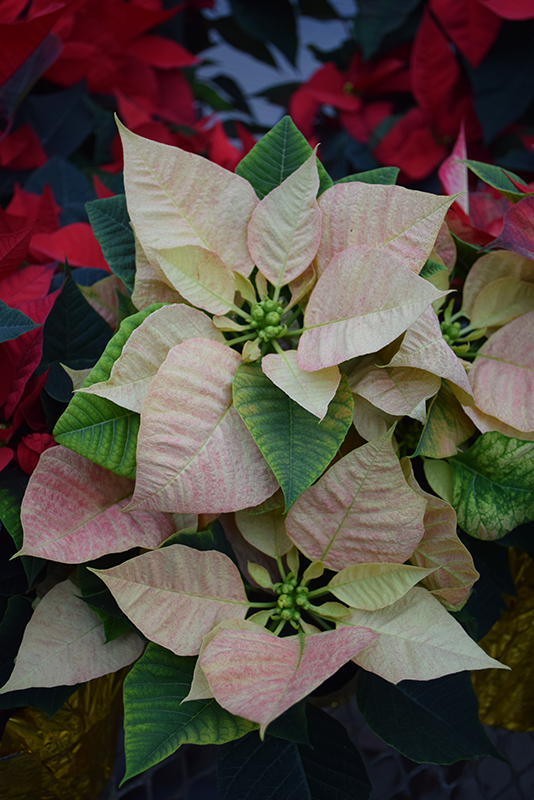
| Care | Poinsettias are usually grown indoors as seasonal plants. They decorate winter households around Christmas time and over the New Year celebrations, bringing a splash of colour to a cold and bleak time of the year when vibrant plants are in short supply. In nature, they are found growing as small shrubs in relatively dry tropical forests of the mid-Americas, where temperatures rarely dip below freezing. The distinctive colouration of their flower bracts is also not completely natural, but rather is forced in the greenhouse through a special combination of timing and controlled darkness. This is why poinsettias tend to be treated as disposable plants, as it is much more difficult for the average home gardener to get them to colour in subsequent years than it is to just buy a replacement each year. Given their short lifespan indoors, they are generally purchased at their final height, spread and density, all of which are achieved in a controlled greenhouse environment. As such, they are generally not grown outdoors in a garden or a landscape, even in regions where they are winter-hardy. However, avid gardeners are often able to keep poinsettias as indoor houseplants and get them to colour year after year; contact the store for additional information on how to do this. During its stunning seasonal visit to your home, treat your poinsettia like you do most other houseplants. The idea is to keep the plant healthy and the foliage and bracts colourful throughout this period. Keep it in a consistently warm location away from cold drafts. Bright sunlight isn't necessary unless you're trying to keep it long beyond its intended season, but neither will it hurt the plant. It will even thrive with minimal light for a couple of months. Your poinsettia requires even moisture and should not be allowed to dry out; be prepared to water it every 2-3 days, as soon as the soil is no longer moist to the touch. If the leaves start to droop, it needs watering immediately! Poinsettias usually come with sufficient soil and/or growing medium, so they don't need to be repotted unless otherwise indicated. |
|---|

Reviews
There are no reviews yet.